Seminar on “Live Stock Insurance” – Need of the day
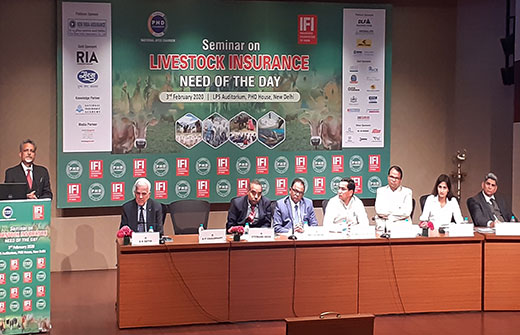
Why the need for Specialized Seminar on Livestock Insurance?
Under the leadership of Hon’ble Prime Minister Sh. Narendra Modi the initiative taken by the present Government is to double the farmer’s income in India by 2022. To achieve this multi-modal focus on all farming activities is proposed with special emphasis on Allied Agricultural activities such as veterinary etc.
As the growth of Crop/ Agriculture income has a limitation, therefore, thinking which has emerged is that farmers/ rural population should go in for more and more of:
- Dairy Farming
- Poultry Farming
- Fishery
- Rearing of Goat/ Sheep
- Bee Farming
- Silk Worm Production
In 2019, a separate Department of Animal Husbandry & Dairying was created in the Ministry of Fisheries, Animal Husbandry, and Dairying.
We intend to have this important seminar to discuss the importance of livestock Insurance which is a must for supporting our farmers/ families having livestock as a means for livelihood.
Target Audience will comprise of:
- Officials of Ministry of Animal Husbandry (Govt. of India)
- Officials of Ministry of Animal Husbandry (State Govt.)
- Officials& Scientists of National Dairy Research Institute, Karnal
- Banks/ NBFC/ Micro Finance Institutions providing livestock loans
- Insurance companies issuing Livestock (cattle ) Insurance policies
- Insurance Broking Firms selling livestock (cattle ) Insurance policies
- Senior Management & Officials from Milk Producer Co-operative Societies Like: Amul, Saras, Vila, Vijaya etc.
- Service Providers engaged in Tagging of animals
- Surveyors
- Technology Companies working towards taking Livestock Insurance to the next level, when India emerges as 5 Trillion US $ economy.
Points to be covered in the Seminar are:
- Livestock Risk – Should Insurance be made mandatory?
- Quality of animals can be improved with investment through loans
- Investment & improvement of Veterinary infrastructure is needed in a big way to support the farmers
- Product innovation needed in Insurance
- What can we learn from other countries?
- Availability of Cheaper, sufficient loans is essential for the growth of this part of our economy.
Why farmers need Livestock insurance?
Importance of Livestock Insurance is increasing as more and more loans are being provided by Banks/ NBFC/ Micro Finance Companies for increasing the income of farmers, marginal farmers in all parts of the country. Insurance of Live Stock for the market value paid by the farmer is important to protect his family in the eventuality of the death of an animal.
Who Should Attend the Seminar (Target Participants)?
This is a good opportunity for management/ officials:
- Corporates & Co-operative Societies engaged in Dairy Farming, Milk Collection & Milk Processing
- Honey & Silk Producers
- Banks/ NBFC’S & Micro Finance Companies lending to Farmers
- Insurance Companies
- Reinsurance Companies
- Insurance Brokerage Firms
- Policy Makers at National and State level
- Associations Representing Various Segments Connected with this growth of Animal Husbandry/ Food Processing/ upliftment of society
- NGO’s working in the rural area promoting the growth of animal wealth of our farmers/ employment generation of those who are below BPL.
What you can expect from the Seminar?
Realize the difficulties being faced by Farmer’s possible solutions/ understand the Government thought process and growth potential of this great sector.
Some Key Take Away for Various Stake Holders will be:
- Understanding of the Needs of Farmers which will result in the growth of dairy farming, fisheries, poultry farming, bee farming & silkworm production
- Important Issues in Livestock Insurance
- Availability of credit supported with Insurance can result in growth
- Role of Technology in the monitoring of Claims
Delegate Fee:
- Participation fee: 2000/- per participant.
- Individual Foreign Participant fee: US $ 125
Accommodation:
This is non residential Programme, however, good reasonable hotels/ guest houses are available in surrounding areas such as Panchsheel Enclave, Hauz Khas, Greater Kailash & South Extension.
Programme Coordinator will be ready to assist you in arranging the same (if required)
Seminar on Debtors and Industry Protection Through Insurance- Need of MSME Sector in association with PHD Chamber of Commerce & Industry
Why the need for Specialized Industry Focused Seminar on “Debtors and Industry Protection through Insurance-Need of MSME Sector?”
In the last 20 years profile of Indian economy has changed. Today the Indian economy is one of the fastest growing in the world and the growth & success of MSME is critical for maintaining India’s growth story.
The Micro, Small and Medium Enterprises (MSME) are key contributors to the Indian economy both in terms of employment and industrial output. Many MSMEs tend to be entrepreneurial ventures where the promoter has either invested his/her savings or borrowed money to start a new venture.
Risk is inherent in our lives, but MSMEs are especially vulnerable to risks that threaten the dream venture that they have worked so hard to build. Naturally, with the stakes being so high, insurance is a prudent way to limit liabilities in the event of damage to assets, property and business. For MSMEs, it could be the key to survival. It is important for them to understand the importance of Risk Assessment, need for covering the risks, buy Insurance to protect its assets, liability, which may arise due to various reasons /calamities.
Access to insurance can play a significant role in mitigating risks faced by micro, small, medium enterprises (MSMEs) by smoothening consumption, building assets, absorbing shocks, and managing risks associated with irregular and unpredictable income. Yet, standard insurance services are out of reach of the millions of disadvantaged. Proper risk management reduces the likelihood that risks will materialize and, if it does, insurance reduces or eliminates the financial impact. Insurance can make MSMEs resilient to shocks, making them more financially sound. However, MSME Insurance in India is a highly underpenetrated market, especially in the non-mandatory segments.
Against this Backdrop, Insurance Foundation of India in association with PHD Chamber of Commerce & Industry is organising a Seminar on “Debtors and Industry Protection Through Insurance – Need of MSME Sector”, at 3.30 PM on Tuesday, 30 July, 2019 at PHD House, New Delhi.
Topics to be covered:
During this Seminar high level of clarity will be achieved by discussing the following:
- Insurance Needs of MSME
- Debt Protection through Credit Insurance
- Industry Protection through Fire, Burglary, Money in transit and safe, Fidelity Guarantee and Public Liability Insurance covers
- Lodging of Claims and Settlement of Claims
- Case Studies on how Insurance helped MSME
- Questions & Answers
Who Should Attend the Seminar?
This is a good opportunity for:
- Industrialists
- Business men
- Chartered Accountants/ Accountants
- HR Managers
- Company Secretaries
- Insurance Managers/Officer/ of Corporates or MSME ‘s
- Surveyors
- Agents/Corporate Agents/Insurance Brokerage Firms
- Insurance Institutes/ Academic Faculty/ Students
Delegate Fee:
Free, but Prior Registration/ Confirmation are requested to attend this seminar.
Seminar on “Debtor and Industry Protection through Insurance -Need of MSME Sector” 2018
Why need for Specialised seminar on “Debtor and Industry Protection through Insurance – Need of MSME Sector”
In the last 20 years profile of Indian economy has changed. Today the Indian economy is one of the fastest growing in the world and the growth & success of MSME is critical for maintaining India’s growth story.
The Micro, Small and Medium Enterprises (MSME) are key contributors to the Indian economy both in terms of employment and industrial output. It is important for them to understand the importance of Risk Assessment, need for covering the risks, buy Insurance to protect its assets, liability, which may arise due to various reasons /calamities.
Access to insurance can play a significant role in mitigating risks faced by micro, small, medium enterprises (MSMEs) by smoothening consumption, building assets, absorbing shocks, and managing risks associated with irregular and unpredictable income. Yet, standard insurance services are out of reach of the millions of disadvantaged. Proper risk management reduces the likelihood that risks will materialize and, if it does, insurance reduces or eliminates the financial impact. Insurance can make MSMEs resilient to shocks, making them more financially sound.
Against this Backdrop, Insurance Committee of PHD Chamber is organising Seminar on “Debtor’s Insurance- Needs of MSME Sector” on Tuesday, 10th April 2018 at PHD House, New Delhi.
The workshop will feature and address the following issues:
- Insurance Needs of MSME
- Debt Protection through Credit Insurance
- Industry Protection through Fire, Burglary, Money in transit and safe, Fidelity Guarantee and Public Liability Insurance covers
- Lodging of Claims and Settlement of Claims
- Case Studies on how Insurance helped MSME
- Questions & Answers
Who Should Attend the Programme?
This is a good opportunity for:
- Industrialists
- Business men
- Chartered Accountants/ Accountants
- HR Managers
- Company Secretaries
- Insurance Managers/Officer/ of Corporates or MSME ‘s
- Surveyors
- Agents/Corporate Agents/Insurance Brokerage Firms
- Insurance Institutes/ Academic Faculty/ Students
This will be an opportunity to you to upgrade yourselves to handle/ buy “Right Insurance from Right Insurance Company at Right Price” in a cost-effective manner.
Some Key Take aways for those who will be attending this informative session will be:
- Understanding why different insurance policies are needed?
- Can these insurance policies ultimately result in better financial health of the company?
- Why knowledge of these insurance policies is a must for Owners, Directors or even Independent Directors.
Traning/ Delegate Fee:
Participation fee (Includes Training, Study Materials & Lunch)
Individual participant fee: Rs. 0/
Group participation fee (team of 5 persons and above): Rs. 0/- each.
Group participation fee (team of 10 persons and above): Rs. 0/- each.
Note:
Prior registration/ confirmation are requested to attend this Training Programme, so that Certificates/ Logistics/ Study Material & Lunch can be arranged accordingly.
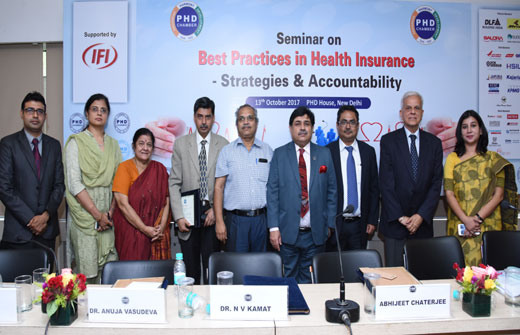
Seminar on Best Practices in Health Insurance – Strategies & Accountability 2017
Seminar Insurance the Savior in Healthcare, The Horizon and Best Practices – 2017
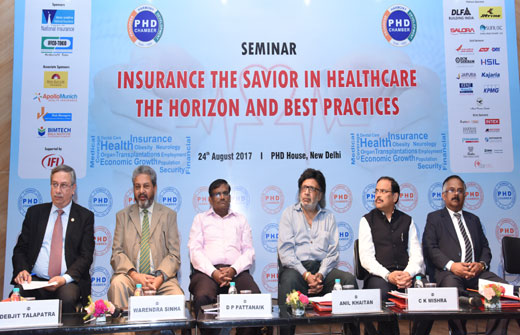
Why need for Specialized Seminar Insurance the Savior in Healthcare, The Horizon and Best Practices?
Healthcare has evolved over the last 2 decades as one of India’s largest sectors – both in terms of revenue and employment. The Indian healthcare sector is growing at a brisk pace due to its strengthening coverage, services and increasing expenditure by public as well private players.
The overall Indian healthcare market is worth around Rs 6,50,000 Crores and is expected to grow to Rs 19,00,000 Crores by 2020, a Compound Annual Growth Rate (CAGR) of 22.9 per cent. Health Insurance is a crucial instrument that provides financial security in times of need. Thus, whether an emergency or a planned hospitalization, a health insurance policy ensures umbrella coverage by helping to pay for the covered medical expenses in case of hospitalization due to illness or injury. Health insurance plans not only safeguard finance but also provide tax benefits. Greater access to health insurance improves health and better health leads to economic growth.
However, there is very low health insurance coverage in the country. About 30 Crores people or 25% of India’s population is covered with some form of health insurance, according to the World Bank. The Insurance Regulatory and Development Authority of India, meanwhile, claims that only 17% of the population has some form of insurance coverage.
Health insurance is an important factor to make healthcare reachable to all. Innovation in health coverage product is required to enhance the healthcare services. To make the healthcare services and coverage available at all doorstep the innovative distribution model using technology is a must. An enhanced distribution channel can contribute to increased insurance penetration and also help in job creation.
Objectives of the Seminar:
- To Generate awareness and sensitize the stakeholder about health coverage
- To improve the overall healthcare services and create business opportunities for the healthcare industry
- To deliberate on innovations required in health insurance products to enhance healthcare services.
- To acquaint the audience with current policies and issues on national and international health insurance coverage and understand the Ministry’s perspectives
- To obtain the list of diseases that must be covered under insurance for healthier and economically stronger India.
- Interact and participate with IRDA Officials (the Regulators) on their perspective.
Topics to be covered:
The seminar will feature and address the following issues:
- Need for Health Insurance for the growing population of India.
- Spreading awareness of Health Care – Importance of Preventive Health Care to bring down Health Care Costs.
- Points to be kept in mind by stake holders.
- Universal Health Insurance – the present need of the Nation.
- Health Care – Early Detection and Prevention
- Government Policy, Compliance and Assurance.
Who Should Attend the Programme (Target Participants)?
This is a good opportunity for:
- Insurance Regulator
- Key Officials from Insurance Sectors (Public & Private)
- Consumer Forums – State & National
- Members, Indian Medical Association
- Indian Council of Medical Research
- National Institute of Health & Family Welfare
- World Bank
- UNICEF/WHO
- Media
- Ambassadors and Diplomats
- Health Care Specialists
- Academia
- NGOs
- Renowned Hospitals
- Industries with CSR perspectives in healthcare promotion
What you can expect from the Programme?
- Health Care needs of masses
- Government Policy to take care of the same.
- Importance of Prevention Health Care with a view to bring down Health Care Costs
- View point of Stake holders.
Some Key Take away for Various Stake Holders will be:
- Awareness of Health Insurance & Health Care
- Current available policies and issues on national and international health insurance coverage
- Understanding of the Ministry’s perspectives
- Understanding of Health Insurance Policies
- Affordable health coverage. The innovative product in affordable price and using digitalization and modern distribution model
- Emerging trends in healthcare and health insurance: Public, Private and Corporate schemes
Delegate Fee:
No delegate fee. Prior registration/ confirmation are requested.
Seminar on “Cyber- Security, Crime & Insurance: Current Scenario and Way Forward” – 2017
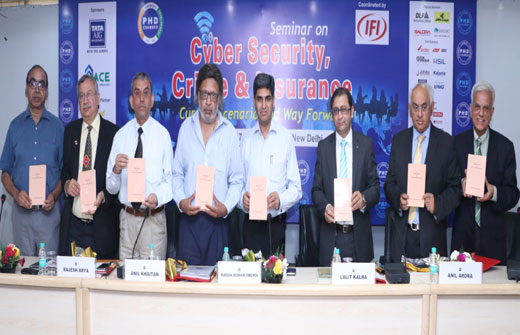
Why need for Specialized Seminar on Cyber- Security, Crime & Insurance: Current Scenario and Way Forward?
Advances in information and communications technologies have revolutionised government scientific, educational and commercial infrastructures. The IT infrastructure has become integral part of the critical infrastructure which supports national capabilities such as power grids, emergency communication systems, financial systems, defense systems and air traffic control networks. The operational stability and security of critical information infrastructure is vital for economic security of the country for individuals, organizations and systems across global networks for trade and economic requirements.
Increasing complexity of IT systems and networks will mount security challenges for both providers and consumers. The increasing interconnectivity and accessibility (and consequently risk) to computer based systems that are critical to country’s economy.
Every aspect of today’s Economic Activity, Government Activity, and Social Media, use of Computer, Mobile Phone, ATM, and Net Banking is dependent on Internet. You do not know virus/ hacking can have huge impact on your business/ personal internet or computer. Cyber Risks cannot be ignored and it is necessary that we invest on Cyber Security.
Next step for any organization is to go in for Cyber Insurance so that losses to own organization or customers can be insured. According to Asia insurance Review “Cybercriminals remain ahead in this cat and mouse game against the defenders and the list of threats will only grow. How can Insurers protect themselves and at the same time provide a safety net for their clients? This is a dynamic role that Insurers must now embrace and juggle”.
Cyber Insurance Seminar is intended to be serious discussion among Stake holders comprising of Corporate, Government, Police, Cyber Security Experts, Insurers to think in the direction on what needs to be done to avoid huge losses, which can affect even the survival of the organization and can impact shareholders wealth or market capitalization.
Scope/ Coverage and Nature of Coverage under Cyber Risk Insurance
It is intended to have a coverage for first-party and third-party liability coverage to organization when cyber-risk materializes and or cyber security controls at organization fails.
The cyber insurance should cover property, theft and liability as represented in below section:
A. Property and Theft:
- Destruction of software system and network
- Unrecoverable Loss of information of organization’s stored data
- Recovery from malware or other malicious codes
- Business interruption due to cyber-incident (Loss of net profit as a result of a material interruption to the insured’s network)
- Denial of Service
- Information Theft – Loss of control of customer’s data/record
- Breach of intellectual property
- Cyber Extortion and Cyber espionage
- Losses due to cyber-terrorist acts
- Harm to electronic media or data contents
- Terrorism/ War exclusion with carve back for Cyber terrorism
B. Liability:
- Network Security
- Private confidentiality breach/Data Liability
- Loss of personal information
- Loss of corporate information
- outsourcing
- Reputational damage
- Repair of the organization’s & individual’s reputation
- Notification and Monitoring
- Business continuity/supply chain disruptions
- Crisis management and response to data theft (includes costs of administrative expenses i.e. forensic investigations, penalties, regulatory and governmental fines)
- Cost of repairing, replacing and updating computer systems
C. Limit of Liability:
Aggregate Limit of Liability per Policy Period for all Loss of all insured under all insurance covers to be combined.
Cyber Crime – Most common forms:
- Hacking – Unauthorised attempts to bypass the security mechanism of an information system or network.
- Data theft (using flash/pen drives, digital cameras).
- Virus or worms, Malware or Trojan horses.
- Identity Theft
- E- mail spoofing
- Botnets and Zombies
- Scareware
Cyber Security Flow:
- Back Up and Recovery – There should be a policy in existence to ensure that regular back up of the critical data are taken and kept on-site and off-site to ensure its availability whenever required.
- Outsourcing – Risks related to integrity, availability and confidentiality of data need to be addressed
- Change Management controls – Only authorised and approved changes are made and proper documentation exists for each area of the system to support future modifications.
- System Security Issues
- Data Migration Issues
Cyber Liability Insurance:
Cyber liability refers to an IT firm’s liability when it is responsible for the security and privacy of a client’s data stored on the IT firm’s servers. Cyber liability insurance policies typically include coverage for:
- Denial of service attacks or inability to access websites or systems
- Unauthorized access to, use of, or tampering with data
- Disclosure of confidential data (invasion of privacy)
- Loss of data or digital assets (malicious or accidental)
- Introduction of malicious code or viruses
- Cyber extortion or terrorism threats
- Personal media injury (defamation, libel, or slander) from electronic content
- Regulatory action, notification, or defense expenses
- Crisis management and public relations expenses
- Data or system restoration
- Business interruption expenses
Who should buy Cyber Risk Insurance policy?:
Following is the list of companies that must have Cyber Risk Insurance policy. This is just an indicative list and not exhaustive.
- Information Technology Companies: Software, Data Centres, ITeS, etc.
- Retailers: E-commerce & Brick and Mortar
- Financial Services
- Services
- Health & Pharmaceuticals, etc.
What are the Risks covered in Cyber Risk Insurance policy?:
Following are some of the most common Risks covered in Cyber Risk Insurance policy.
- Legal Liability to others for Privacy Breaches or Computer Security Breaches
- Loss to Data/Information
- Loss of Revenue due to cyber attack
- Public Relation Expenses
- Regulatory Actions or Scrutiny expenses
- Incidental Expenses to respond to Cyber Attack
- Cyber Extortion Expenses
What are the Exclusions under Cyber Risk Insurance policy?:
Some of the exclusions under this policy are
- Government Entity or Public Authority
- Specific Network Interruption Condition
Topics to be covered:
- Need for Cyber Insurance for insurance related stakeholders
- Cyber Laws/ Regulatory Framework- Legal Issues
- Points to be kept in mind
- Cyber Laws/ Regulatory Framework- Legal Issues
- Cyber Insurance Policy
- Software Implementation for Cyber Protection
- Security Incident – Early Warning and Response
- Security Policy, Compliance and Assurance.
Objective of the Conference:
The conference will feature and address the following issues:
- To provide a platform for open house discussion between Corporates/ Government and stakeholders
- Software Companies ready to provide support for Cyber Security?
- Is suitable insurance available for cyber risk coverage?
Who Should Attend the Programme (Target Participants)?
This is a good opportunity for:
- Insurance Companies (CEOs/CIOs/CTOs & COOs)
- Reinsurance Companies (CEOs/CIOs/CTOs & COOs)
- Insurance/ Reinsurance Professionals dealing with Technology Concerns
- Insurance Brokerage Firms
- Corporates
- Banks/ Financial Firms
- Cyber Security Firms
- Data Management Professionals
- Technology Experts & Other IT Service Providers
- eCommerce Companies
- Law Firms
- Compliance Personnel and In-House Lawyers
- Police Officials
- Chartered Accountants
- Members from Chambers of Commerce and Industry
- Associations Representing Various Segments Connected with this industry
What you can expect from the Programme?
Complete learning of cyber security measures/ protection & choosing best Cyber Insurance Policy for your business.
Some Key Take away for Various Stake Holders will be:
- Understanding of Cyber Security
- Indian Perspective of Cyber Liability Insurance
- Legal Provisions/ Legal framework
- Possible Triggers
- Cyber Risk Insurance policy
- Cyber Security in India
- Data Security and Cybercrime in India
Eminent Speakers addressing this conference will be from:
- Insurance Industry
- Reinsurance Company
- Police Officials
- Law Firms/ Cyber Laws/ Regulatory Framework
- IT/ Cyber Space
- Insurance Brokerage Firms
- Experts on Cyber Insurance
Names are being finalized and will be shared soon.
Delegate Fee:
Participation: Rs. 3000/- per individual participant.
Group participation fee (team of 5 persons): Rs.2500/- each.
Group participation fee (team of 10 persons and above): Rs.2000/- each.
Seminar on Implementation of GST in Insurance Industry – 2017
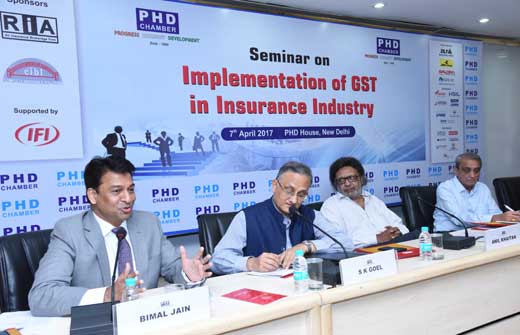
Why need for Specialized Seminar on Implementation of GST in Insurance Industry?
The Goods and Services Tax (GST) is a ground-breaking reform for the Indian economy’s indirect tax regime. GST will change the tax architecture between the state and the centre.
The Goods and Services Tax (GST) is a value added tax that will replace all the indirect taxes levied on goods and services by the government, both central and states, once it is implemented.
The basic idea of this taxation reform is to create a single, cooperative and undivided Indian market to make the economy stronger and powerful.
GST is a value-added tax, which will eliminate the cascading effect or double-taxation effect on the cost of goods and services down the value chain. GST will certainly impact the structure, incidence, computation of indirect taxes leading to a comprehensive restoration of the current tax regime in the country.
The insurance industry of India consists of 53 insurance companies of which 24 are in life insurance business and 29 are non-life insurers. The insurance industry is growing at fast pace. The domestic life insurance industry registered 22.55 per cent growth for new business premium in financial year 2015-16, generating a revenue of Rs 1,35,546 Crores largely due to the high growth in the group single premium policy and the non-life insurance premium market grew at a CAGR of 12.1 per cent over FY04-16 from Rs. 22,658 Crores in FY04 to Rs. 1,20,000 Crores in FY17 (estimated).
The insurance industry is also not going to remain untouched from its impact. It will certainly be going to have an impact on the insurance industry as well as policyholders.
Topics to be covered:
- Need for GST registration for insurance related stakeholders
- Process for GST registration
- Points to be kept in mind
- Avoid mistakes/ delays to avoid penalties
- Points for companies having multiple branches in a state/ all over India/ providing interstate insurance related services.
- Software required catering to the changes so that all stake holders can benefit.
Stake Holders:
- Governments Officials
- Insurance Companies
- Insurance Intermediaries
- Insurance Institutes/ Academic Faculty/ Students
- Members from Chambers of Commerce and Industry
- Chartered accountants/ Tax Consultants/ Cost Accountants
- Insurance Surveyors/ Valuers
- Third Party Administrators (TPA’s)
Objective of the Conference:
The conference will feature and address the following issues:
- To provide a platform for open house discussion between Government and stakeholders
- Smooth transition from present taxation regime to GST is important.
- Are software Companies ready to provide support to large nuclear Insurance Companies, Insurance Intermediaries & others?
- Set off of GST paid at source – What is not covered?
Who Should Attend the Programme (Target Participants)?
This is a good opportunity for:
- Insurance Companies
- Insurance Intermediaries – Insurance Broker firms, Corporate Agents, Agents, Insurance Marketing Firm, Web Aggregators, Surveyors, Loss Assessors, Valuers
- Third Party Administrators (TPA’s)
- Chartered Accountants/ Tax Consultants
- Cost Accountants
- Insurance Institutes/ Academic Faculty/ Students
- Media Personnel
- NGOs
- Members from Chambers of Commerce and Industry
- Associations Representing Various Segments Connected with this industry
What you can expect from the Programme?
Success lies in Smooth transition so that all stake holders can be benefitted from GST. Objective to avoid penalties.
Some Key Take away for Various Stake Holders will be:
- Understanding of GST rules/ regulation is important.
- Smooth transition from present taxation regime to GST is important
Eminent Speakers addressing this conference will be from:
- Insurance Industry
- Law Firms
- Insurance Brokerage Firms
- Chartered Accountants
- Insurance Surveyors/ Valuers
- Experts on GST
Names are being finalized and will be shared soon.
Delegate Fee:
Participation: Rs. 1500/- per individual participant.
Group participation fee (team of 5 persons): Rs.1250/- each.
Group participation fee (team of 10 persons and above): Rs.1000/- each.
Seminar on “Financial Risks & Liability Insurance” Current Scenario and Way Forward 2016
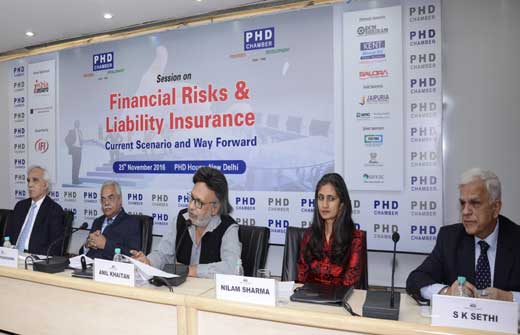
Why need for Specialized Seminar on Financial Risks & Liability Insurance?
In the last 20 years profile of Indian economy has changed and we are seeing large growth in Servicing Industry as a result it has become a significant player in Indian economy. IT, e-commerce, exports, project exports, acquisition of companies in foreign countries by Indian Companies or inflow of PE, VC Funding from foreign investors in Indian companies especially in Pharma, IT and ecommerce is resulting in changes in Board Room. These changes have resulted in need for Insurance Policies as a part of Shareholders agreement being signed between Indian Promoters & Strategic Investors or PE/VC funds.
We come across need for buying of D & OE insurance Policy or 3rd party liability insurance policy as a requirement clearly recorded in shareholders’ agreement. Now a day’s 3rd party liability insurance policy is required by RWA or owner of the building for getting license from Government authorities in Haryana for issuing license for operating lifts in Multi story towers
The Seminar will feature and address the following issues:
- Risk perception of non-executive/ independent/ female directors joining board of Indian Companies
- D & O: Need of modern industry
- Need of changes in Indian Companies Act
- Legal Issues in Insurance
Who Should Attend the Programme?
This is a good opportunity for:
- Industrialists
- Owners of Business houses
- Directors/ Independent Directors
- CEO’s
- CFO’s
- HR Managers
- Company Secretaries
- Specialists handling underwriting/ business development/ claims pertaining to Liability Insurance in Insurer Firms
- Insurance Managers of Corporate’s
- Insurance Institutes/ Academic Faculty/ Students
This will be an opportunity to you to upgrade yourselves to handle changing requirements in the economy.
What you can expect from the Programme?
- Understanding why these comparatively new type of insurance policies are needed?
- Can these insurance policies increase the market capitalization of a listed company or valuation of the closely held company undergoing due diligence for % divestment to Strategic Partner or a VC fund?
- Why knowledge of these insurance policies are a must for promoter directors/ Executive Directors or even Independent Directors, where some of them might have given personal guarantee at the time of disbursement of loan.
- Clauses pertaining to Financial Risks & Liability Insurance which you should look for when signing Share holder agreement with JV partner or VC Fund?
Topics to be covered:
- Liability Insurance
- D & OE/ Errors & Omissions: Need of IT Industry, bpo, kpo or ecommerce supported by case studies within India and abroad.
- Human resource aspects & correlation with D&OE policy
Delegate Fee:
Participation free: But need pre confirmation
Seminar on Pradhan Mantri Fasal Bima Yojna 2016 – Insuring Crops, Assuring Farmers, Ranchi (Jharkhand)
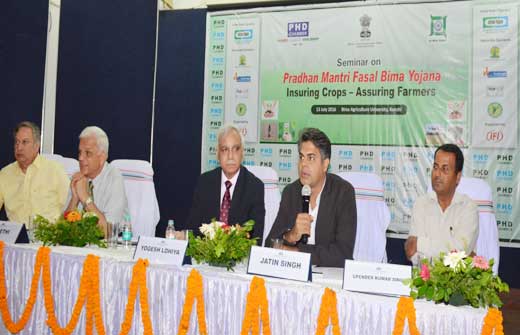
National Seminar on Pradhan Mantri Fasal Bima Yojna (Status and Need for Accessibility)
Agriculture has been a crucial sector in many developing countries across the world for its perceived ability to contribute significantly to achieve developmental objectives such as economic growth, employment generation, food security, poverty reduction, and environmental sustainability. Increasing the productive capacity of agriculture through higher productivity has been the main policy agenda in many developing economies.
Jharkhand is located in East India; agriculture is the mainstay for the 80% of rural population. Agriculture creates employment and primary income generating activity. The agricultural economy of the Jharkhand is characterized by dependence on nature, low investment, low productivity, mono-cropping with paddy as the dominant crop, inadequate irrigation facilities and small and marginal holdings. The dependence of agriculture on the vagaries of the rain-god can be gauged from the fact that as much as 92% of the total cultivated area is un-irrigated.
The cultivable land resources of the state have good potential for higher production of horticulture and forest products. The soil is fertile and has high capacity of fixation of humus. However, soil erosion and failure to recycle the biomass is depleting the soil fertility. Hence, a judicious soil, water and land management is required that can improve agriculture productivity. Despite the fact that the State has a good rainfall, the surface water availability to agriculture is not sufficient due to inadequate storage facilities etc. as far as the status of ground water is concerned, it is also in the poor state due to little recharging of ground water by natural process in absence of artificial recharging facilities, as a result, the water table in the plateau is going down.
The Govt. of India is dedicated to protect its farmers. This will not only help in sustaining livelihood of the farmers, but also increase the yield of crops grown. But there are several natural hindrances which prevent growth of crops. These are droughts, irregular rainfall, floods, etc. These natural calamities result in poor yield of crops. Also as the crops gets damaged midway production and yield is hampered. Another problem is when there is an over production of crops which happens sometimes, then the market demand falls and thus the farmers do not get good prices for their crops and suffer great losses. This leads to greater economic losses for farmers often leading to fatal consequences.
Insurance penetration amongst India’s farming community is abysmal and this is a known fact. Out of the gross cropped area of 195.26 million hectares in the country, only 42.82 million hectares or 22 per cent was covered under crop insurance in 2014. While the coverage was higher in some states — especially Rajasthan and also Chhattisgarh, Odisha, Bihar and Karnataka — it was hardly a tenth or less for the likes of Gujarat, West Bengal and Uttar Pradesh.
Low spread of agricultural insurance — one in every five hectares — isn’t the only issue. Equally important is the inadequacy of cover, in terms of the sum insured (SI) or the maximum amount that insurance would pay in the event of crop damage.
According to the Commission for Agricultural Costs and Prices (CACP), the average SI per hectare under the existing national agricultural insurance scheme was just Rs 18,464 (Rs 19,141 in kharif and Rs 16,927 in rabi) in 2013-14. This is way below the gross value of output (GVO) for most crops. For paddy the GVO on an all-India average yield of 36 quintals and minimum support price (MSP) of Rs 1,310/quintal in 2013-14 worked out to Rs 47,160 per hectare. If policy claims cannot cover even half of the value of produce when the crop suffers heavy damage, it only shows why farmers are not really interested in taking insurance protection. And it also explains the poor spread of crop insurance in a country that has experienced five full-fledged drought years (2002, 2004, 2009, 2014 and 2015) in this century alone.
Earlier, the insurance scheme which was functional was called the National Agriculture Insurance Scheme (NIAS), which was implemented in the year 1999, was implemented only in 14 states of India. The insurance settlements were handled by the insurance company namely Agriculture Insurance Company of India Ltd. (AIC). Under NIAS, the insurance premium rates were 1.5 % to 3.5 % of the total sum assured for food crops like pulses, oilseeds, cereals, etc. But for commercial crops like cotton and horticultural crops, the actuarial premium rates were charged.
To improve further and make the Scheme easier and more farmer friendly, a proposal on Modified National Agricultural Insurance Scheme (MNAIS) was prepared and was approved by Government of India for implementation on pilot basis in 50 districts from Rabi 2010-11 season. During the Five seasons of its implementation in 17 States, the MNAIS covered 45.80 lakh farmers for a premium of Rs.1,08,800 lakh against the claim of Rs.86,400 lakh until Rabi 2012-13. The total area insured was 46.79 lakh hectares during the same period.
With the objective to bring more farmers under the fold of Crop Insurance, a Pilot Weather Based Crop Insurance Scheme (WBCIS) was launched in 20 States in 2007. Apart from Agriculture Insurance Company of India, some private companies have also been allowed to implement the Scheme. The WBCIS is intended to provide insurance protection to the farmers against adverse weather incidences, such as deficit and excess rainfall, high or low temperature, humidity etc. The WBCIS was implemented in 18 States and 469.38 lakh farmers were covered for a premium of Rs.7,51,920 lakh against the claims of Rs. 52,860 lakh under the Scheme from 2007-08 to 2012-13.
According to reports in the past year 2015, there were 207 draught hit districts throughout the country where the farmers suffered great economic losses on crop cultivation. Also reports show that more than 300 districts were affected by irregular rainfall.
To provide a better financial support to the farmers of the country Govt. of India has launched the The Pradhan Mantri Fasal Bima Yojana scheme in February 2016. A major boost to crop insurance has come via the Union budget, which has nearly doubled funding from Rs.2, 995 crore in 2015-16 (revised estimates) to Rs.5,501 crore in 2016-17.
The Pradhan Mantri Fasal Bima Yojana (PMFBY) is effective from April 2016. The new scheme will come into force from the Kharif season starting in June this year. The scheme covers kharif, rabi crops as well as annual commercial and horticultural crops. For Kharif crops, the premium charged would be up to 2% of the sum insured. For Rabi crops, the premium would be up to 1.5% of the sum assured. For annual commercial and horticultural crops, premium would be 5 per cent.
Earlier only those farmers who have taken loans for their cultivation, were eligible for insurance of their crops. However as per the new scheme, all farmers are eligible for the new crop insurance scheme irrespective of the condition of taking loan or not. The insurance plan will be handled under a single insurance company, AIC and entire insurance process; right from joining of farmers to disbursement of claim is to be made electronically to make it a fraud free and effective scheme.
In view of these various concerns and complexities, PHD Chamber is organizing a Seminar on “Pradhan Mantri Fasal Bima Yojna” on 6th July, 2016 from 10.00 am at Chanakya BNR Hotel, Ranchi.
The main objectives of the seminar are to create awareness among all the related stake-holders and to deliberate on different aspects of the Pradhan Mantri Fasal Bima Yojana. Also to focus on all the regulations and technologies like use of remote sensing, smart phones and drones for quick estimation of the crop loss and making the claims process faster. The aim of the seminar is also to sensitize all the stake- holders on the adoption of Pradhan Mantri Fasal Bima Yojna and increase the insurance penetration.
The sessions will be joined by the senior officials from the Ministry of Financial Services, Government of India, Insurance Regulatory and Development Authority (IRDA), Agricultural Insurance Companies, Banks, Financial Institutions and representatives from the farmer community, Weather Forecasting experts.
ISSUES & WAY FORWARD
Farming is an inherently risky business and farmers face many types of risks. The two most important risks that farmers face are:
| 1. | Yield Risk: | Agriculture, in India is heavily dependent on monsoon, which at times is uncertain. Immemorial weather has been the major adversary that the farmers are not able to control. |
| 2. | Price Risk: |
|
TARGET GROUPS
- Companies Handling Agricultural Insurance/ Fasal Bima Yojna
- Small and Big Farmers/ Progressive Farmers
- Contract Farmers/ Corporate Farmers
- Financial Institutions/ Banks funding agriculture loans/ Micro Finance Companies
- Weather Forecasting companies
- Academic Faculty
- Central and State government officials
- Agri-based Technology Stake-holders
- IRDA officials
- Experts from sector of Agribusiness
- Insurance Intermediaries/ Brokerage Firms
DELEGATE FEE
Free