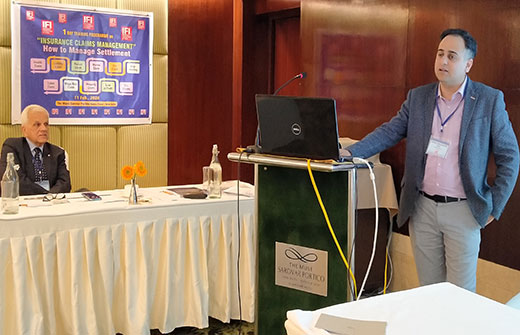
1 Day Training Programme on “Insurance Claims Management” – How to Manage Claims Settlement?

Why need for Training Programme on “Insurance Claims Management”?

Insurance Policy is a contract between Insurance Company & Insured. It is a legal document and is to be used when the claim is lodged by the Insured. Most of the customers are ignorant about this fact and face difficulty when the claim is lodged.

In this programme we will be discussing in detail about the importance of various aspects of claims.

  • Lodging of Claims
  • Interaction with Insurance Companies/ Surveyors.
  • Importance of accounting records
  • Need for a team effort in interaction with Insurance Companies/ Insurance Surveyors

Claims to be covered in details are:

  • Property (including Project, Engineering, Mega Risk) Insurance Claims
  • Marine Cargo Insurance Claims
  • Liability Insurance Claims
  • Health Insurance Claims
  • Cyber Insurance Claims
  • Loss of Profit (Business Interruption) Claims

Topics to be covered:

  • Importance of buying Insurance based on policy wording and not on the lowest price
  • Need of documents when the claim is lodged
  • Importance of Police Report/ Fire Service Report in case of fire claims
  • Importance of photography and maybe Drone videography
  • Claims Case Studies for every portfolio

Who Should Attend the Training Programme (Target Participants)?

This is a good opportunity for:

  • Corporates (Manufacturing/ Traders/ Exporters / Importers / Infrastructure)
  • Banks/ NBFC Firms
  • Claims Department Officials in Insurance Companies
  • Insurance Brokerage Firms
  • Surveyors Loss Assessors/ Investigators/ Detectives
  • Law Firms
  • Chartered Accountants
  • Members from Chambers of Commerce and Industry
  • Insurance Consultants

What you can expect from the Training Programme?

  • Importance of process & systems in your organization
  • Assets Register
  • Timely additions/ Increase in Sum Assured

Some Key Take Away for Various Stake Holders will be:

  • Understanding of Insurance Claims
  • Legal Provisions/ Legal framework
  • How insurance Companies look/ Detect frauds/ Fake/ inflated Claims

Delegate Fee:

  • Participation fee: 4000/- per individual participant.
  • Group participation fee (team of 3 persons): 3750/- each.
  • Group participation fee (team of 5 persons and above): 3500/- each.
  • Individual Foreign Participant fee: US $ 125

Accommodation:

This is nonresidential Programme; however reasonable hotels/ guest houses are available in surrounding areas such as Nehru Place, Greater Kailash I & II, Panchsheel Enclave. (Nearest Metro Station Nehru Enclave & Nehru Place). Programme Coordinator will be ready to assist you in arranging the same (if required)

Certificate:

Certificates will be issued to the participants on completion of this Programme.

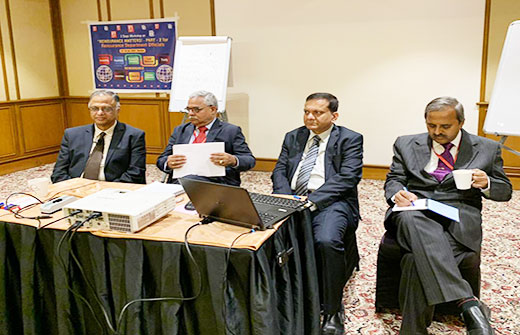
2 Days Workshop on “Reinsurance Matters! Part – 2 for Reinsurance Department Officials” – An extensive programme supported with Case Studies, Examples and Working Exercises

Reinsurance Matters! Part 2 Workshop for RI Department officials:

Indian General Insurance Industry has grown more than 17 times since opening of the Sector in 2001. With 33 General and Health Insurance Companies in business, Reinsurance capacity requirements of Indian Insurance companies have also grown manifold.

With the Insurance Amendment Act 2015 permitting Branches of Global reinsurers to be set up, Lloyds Corporation and 10 Global reinsurance majors have already set up Branch offices in India.  Tax concessions for Insurance and reinsurance companies to be set up in International Finance Centre in GIFT City, near Ahmedabad has also created keen interest has been evoked among international Reinsurers to open business units.

Thus, a foundation is being laid to build Reinsurance capacity, capabilities, professional expertise and infrastructure within India, and we are sure that an important regional Hub can be established in India to canter to Afro-Asian Insurers.

Indian Reinsurance premium volume at 31st March 2019 levels can be estimated USD 7 Billion (approx. 30% of Gross Domestic Insurance premium).Flagship Crop insurance schemes (PMFBY), Frequent and Severe Natural disaster events, Newer Risks (e.g., Cyber liability) Newer products (e.g., Title Insurance) and Large industrial risks and infrastructure projects, and innovative insurance solutions and products, require crucial reinsurance capacity and protection. With India’s huge untapped insurance potential, both Insurance and Reinsurance business would grow further.

Keeping the growing Reinsurance business potential in focus, the Programme Coordinator has visualized the need for comprehensive knowledge sharing on Reinsurance Fundamentals, practices and Reinsurance market dynamics to develop a talent pool of Reinsurance professionals in India.  Programme Director has designed a three-part Reinsurance Knowledge sharing programme on the theme “Reinsurance Matters! 

The first part of this tri-series focused on Fundamentals of Reinsurance, Underwriting, Claims and Accounting aspects. It was successfully conducted on 25th and 26th November 2019 at Orchid Hotel, Near Mumbai Domestic Airport. This programme was designed to give a basic conceptual understanding of Reinsurance business principles and practice.  In all, 58 Participants from Insurers, Reinsurers, Reinsurance intermediaries (Insurance Breakage Firms) and Software companies attended the programme.

This is the second part of the tri-series, 2-day training programme/ workshop scheduled to take place on 23-24 Jan, 2020 in Mumbai. It is aimed to help Officers in Insurance and Reinsurance Companies to gain practical knowledge on application of Reinsurance fundamentals and types of Reinsurance Contracts, in designing a basic Reinsurance Program, preparing the data submissions for obtaining Reinsurance quotations, Terms and conditions relating to Claims, Technical accounts and administration of the Reinsurance transactions that would arise out of the various Reinsurance contracts.

This second programme of the Tri will include following important:

  1. A Quick Recap of Types and Methods of Reinsurance contracts – Using sample RI slips
  2. Data Submissions for a typical Annual Reinsurance Programme for General Insurers
  3. Designing a Reinsurance Programme Structure (through case studies)
  4. FAQs between Reinsurers and Insurers during Negotiation of RI Terms; as well as Administration of RI Contracts during the year
  5. Typical issues faced by Insurers – Rendering of Technical accounts – Quarterly accounts, Sliding scale commission, Profit commission statements, Portfolio withdrawal and entry accounting, Adjustment accounts for Excess of Loss – Burning Cost methods, other adjustment accounting etc.

Practical examples and Case-study methods would be adopted.   Opportunity would be given to the participants to work out the case studies.  The faculty Comments and feedback would be given

Teaching Method to be adopted will be:

  • Pre Reading material will be sent to participants
  • Participants are expected to send their questions/ queries/ doubts so that faculty can include these in lectures & discussions.
  • Group Discussions
  • Problem Solving.
  • Presentations by selected Group Leader
  • The objective will be to improve the level of the participants, who are going to handle higher responsibility in the near future.

Who Should attend the Training Programme (Target Participants):

  • This is a good opportunity for Officials and Employees working in
  • Insurance Companies
  • Reinsurance Companies/ Branches
  • Insurance Broking Firms (handling Reinsurance business)
  • KPO’s providing Reinsurance services to Indian and foreign clients
  • Reinsurance Consultants

What you can expect from the training Programme?

Every official involved in Reinsurance functions in insurance companies and Reinsurance Intermediaries is handling only a portion of Reinsurance activity, many a times without complete knowledge of what and why they are doing them. Many officers are busy with either facultative placements or preparing treaty accounts using IT system.  This programme will be ideal for them to develop keen interest in the subject, understand the work they are doing and enthuse them to pursue a career as a Reinsurance professional.

The participants would be expected to be working in Reinsurance Underwriting, Claims or Accounting areas and have gained basic understanding of the concepts and working examples reflecting the day to day reinsurance operations and administration.

The participants working or would be handling the Reinsurance function of the organization would gain immensely, if they attend this programme – dealing with technical aspects of how a Reinsurance Programs can be tailored to meet the needs of clients and the day to day administrative and accounting issues that need constant attention.

Participation fee

  • Individual participant fee: Rs 20,000/- each
  • Group participation fee (team of 3 persons and above): 18,000/- each
  • Individual Foreign Participant fee : US $ 500

* We reserve our right to choose from multiple nominations.

Note: Prior registration/ confirmation is required to attend this Training so that Logistics/ Study Material can be organised accordingly.

Accommodation:

This is non residential programme; however good reasonable hotels in Andheri, Vile Parle, near Domestic Airport are available in surrounding areas. Programme Coordinator will be ready to assist you in arranging the same (if required).

Certificate:    

Certificates will be issued to the participants on completion of this Training Programme.

Tailor Made Training Programme:  

We will be pleased to conduct Training Programmes as per your requirement at your location. Let us know your requirement at vp@ifingo.org

2 Days Workshop on “Reinsurance Matters! – Fundamentals, Underwriting Claims and Accounting aspects” – Ideal for Reinsurance Beginners and Non Reinsurance officials eager to make successful career in Reinsurance

Reinsurance Matters!

Indian General Insurance Industry has grown more than 17 times since the opening of the Sector in 2001. With 33 General and health Insurance companies in business, Reinsurance capacity requirements of Indian Insurance companies have also grown manifold.

With the Insurance Amendment Act 2015 permitting Branches of Global reinsurers to be set up, Lloyds Corporation and 10 Global reinsurance majors have already set up Branch offices in India. Tax concessions for Insurance and reinsurance companies to be set up in the International Finance Centre in GIFT City, near Ahmedabad has also created keen interest has been evoked among international reinsurers to open business units.

Thus, a foundation is being laid to build Reinsurance capacity, capabilities, professional expertise, and infrastructure within India, and a significant Regional Reinsurance Hub can be established in India to cater to Afro-Asian insurers.

Indian Reinsurance premium volume at 31st March 2019 levels can be estimated at USD 7 Billion (approx. 30% of Gross Domestic Insurance premium). Flagship Crop insurance schemes (PMFBY), Frequent and Severe Natural disaster events, Newer Risks (e.g., Cyber liability) Newer products (e.g., Title Insurance) and Large industrial risks and infrastructure projects, and innovative insurance solutions and products, require crucial reinsurance capacity and protection. With India’s huge untapped insurance potential, both Insurance and reinsurance business would grow further.

Keeping the growing Reinsurance business potential in focus, the Programme Director has visualized the need for comprehensive knowledge sharing on Reinsurance Fundamentals, practices and Reinsurance market dynamics to develop a talent pool of Reinsurance professionals in India. Programme Director has designed a three-part Reinsurance Knowledge sharing programme on the theme “Reinsurance Matters!”.

This first part of this tri-series focusses on Fundamentals of Reinsurance, Underwriting, Claims and Accounting aspects. This programme is designed to cater to Insurance and Reinsurance officials working in the Indian Non-life Insurance sector to gain a basic conceptual and understanding of Reinsurance business principles and practice. This programme would be the first stepping stone for Insurance Officials eager to build a successful career in Reinsurance.

This 2-day training programme/ workshop on RI fundamentals aimed to help Junior and entry level Officers in the Insurance and Reinsurance industry gain practical knowledge on the application of Reinsurance Fundamentals, Types of Reinsurance Contracts, Accounting, and Administration of the Reinsurance transactions.

This first programme would cover the following topics

  • Fundamentals Principles and Functions of Reinsurance
  • Types and Methods of Reinsurance Contracts
  • Facultative Reinsurance
  • Proportional Treaties and Non-proportional Reinsurance Contracts
  • Treaty Slips, Contract Documents, and Legal aspects
  • Reinsurance Claims, Recoveries and Outstanding claims
  • Accounting of Reinsurance Premium and Claims Transactions
  • Regulations governing Reinsurance business
  • Reinsurance Markets, Role of Intermediaries and Placements
  • Introduction to Reinsurance Programme Structure and Design

Who Should Attend the Training Programme (Target Participants)

This is a good opportunity for Officials and Employees working in

  • Insurance Companies
  • Reinsurance Companies/ Branches
  • Insurance Broking Firms (handling Reinsurance business)
  • KPO’s providing Reinsurance services to Indian and foreign clients
  • Reinsurance Consultants
  • Law Firms handling Legal cases/ Arbitration

What you can expect from the Training Programme?

Every official involved in Reinsurance function in Insurance Companies, Reinsurance Companies & Insurance Intermediaries is handling only a portion of Reinsurance activity, many a times without complete knowledge of what and why they are doing them. Many officers are busy with either facultative placements or preparing treaty accounts using IT system. This programme will be ideal for them to develop keen interest in the subject, understand the work they are doing and prepare them to pursue a career as a Reinsurance professional.

The participants would be expected to understand the concepts and working examples reflecting the day to day reinsurance operations and administration. At the end of the training programme, the participants will find that they have gained an all-round knowledge in Reinsurance Fundamentals, Contracts, Claims, Accounting and Administration aspects.

The participants working or aspiring to work in the Reinsurance function of their organization would gain immensely, if they attend this programme and the second part of the Series on Reinsurance Matters! .This will be dealing with technical aspects of Reinsurance business operations, a review of reinsurance structures, a discussion of how RI programs can be tailored to meet the needs of clients and the issues that some of the structures create for reinsurers. This programme is tentatively scheduled on 23 & 24 January 2020.

Participation fee

  • Individual participant fee: Rs. 10000/- each
  • Group participation fee (team of 3 persons and above): Rs. 9000/- each
  • Group participation fee (team of 5 persons and above): Rs. 8000/- each
  • Individual Foreign Participants fee: US $ 250

Note: Prior registration/ confirmation is required to attend this Training, g so that Logistics/ Study Material can be organised accordingly.

Accommodation:

This is non-residential programme; however good reasonable hotels in Andheri, Vile Parle, Near Domestic Airport are available surrounding areas. Programme Coordinator will be ready to assist you in arranging the same (if required).

Certificate:

Certificates will be issued to the participants on completion of this Training Programme.

1 Day Training Programme on Cyber- Security, Crime & Insurance 2019

Why need for Specialized Training Programme on Cyber – Security, Crime, and Insurance?

Advances in information and communications technologies have revolutionised government scientific, educational and commercial infrastructures. The IT infrastructure has become integral part of the critical infrastructure which supports national capabilities such as power grids, emergency communication systems, financial systems, defense systems, and air traffic control networks. The operational stability and security of critical information infrastructure is vital for the economic security of the country for individuals, organizations, and systems across global networks for trade and economic requirements.

Increasing the complexity of IT systems and networks will mount security challenges for both providers and consumers. The increasing interconnectivity and accessibility (and consequently risk) to computer based systems that are critical to the country’s economy.

Every aspect of today’s Economic Activity, Government Activity, and Social Media, use of computers, Mobile Phone, ATM, and Net Banking is dependent on the Internet. You do not know viruses/ hacking can have huge impact on your business/ personal internet or computer. Cyber Risks cannot be ignored and it is necessary that we invest in Cyber Security.

The next step for any organization is to go in for Cyber Insurance so that losses to own organization or customers can be insured.

According to Asia insurance Review “Cyber Criminals remain ahead in this cat and mouse game against the defenders and the list of threats will only grow. How can Insurers protect themselves and at the same time provide a safety net for their clients? This is a dynamic role that Insurers must now embrace and juggle”.

Cyber Insurance training programme is intended to be a serious discussion among Stakeholders comprising of Corporate, Government, Police, Cyber Security Experts, Insurers to think in the direction on what needs to be done to avoid huge losses, which can affect even the survival of the organization and can impact shareholders wealth or market capitalization.

Scope/ Coverage and Nature of Coverage under Cyber Risk Insurance
It is intended to have coverage for first-party and third-party liability coverage to the organization when cyber-risk materializes and or cybersecurity controls at the organization fail.

The cyber insurance should cover property, theft, and liability as represented in the below section:

A- Property and Theft:

  • Destruction of software system and network
  • Unrecoverable Loss of information of organization’s stored data
  • Recovery from malware or other malicious codes
  • Business interruption due to cyber-incident (Loss of net profit as a result of a material interruption to the insured’s network)
  • Denial of Service
  • Information Theft – Loss of control of customer’s data/record
  • Breach of intellectual property
  • Cyber Extortion and Cyber espionage
  • Losses due to cyber-terrorist acts
  • Harm to electronic media or data contents
  • Terrorism/War exclusion with carve back for Cyber terrorism

B- Liability:

  • Network Security
  • Private confidentiality breach/Data Liability
    1. Loss of personal information
    2. Loss of corporate information
    3. outsourcing
  • Reputational damage
    1. Repair of the organization’s & individual’s reputation
    2. Notification and Monitoring
  • Business continuity/supply chain disruptions
  • Crisis management and response to data theft (includes costs of administrative expenses i.e. forensic investigations, penalties, regulatory and governmental fines)
  • Cost of repairing, replacing and updating computer systems

C- Limit of Liability:

Aggregate Limit of Liability per Policy Period for all Loss of all insured under all insurance covers to be combined.

Cyber Crime – Most common forms:

  • Hacking – Unauthorised attempts to bypass the security mechanism of an information system or network.
  • Data theft (using flash/pen drives, digital cameras).
  • Virus or worms, Malware or Trojan horses.
  • Identity Theft
  • E- mail spoofing
  • Botnets and Zombies
  • Scareware

Cyber Security Flow:

  • Back Up and Recovery– There should be a policy in existence to ensure that regular back up of the critical data are taken and kept on-site and off-site to ensure its availability whenever required.
  • Outsourcing– Risks related to integrity, availability and confidentiality of data need to be addressed
  • Change Management controls– Only authorised and approved changes are made and proper documentation exists for each area of the system to support future modifications.
  • System Security Issues
  • Data Migration Issues

 Cyber Liability Insurance:

Cyber liability refers to an IT firm’s liability when it is responsible for the security and privacy of a client’s data stored on the IT firm’s servers. Cyber liability insurance policies typically include coverage for:

  • Denial of service attacks or inability to access websites or systems
  • Unauthorized access to, use of, or tampering with data
  • Disclosure of confidential data (invasion of privacy)
  • Loss of data or digital assets (malicious or accidental)
  • Introduction of malicious code or viruses
  • Cyber extortion or terrorism threats
  • Personal media injury (defamation, libel, or slander) from electronic content
  • Regulatory action, notification, or defense expenses
  • Crisis management and public relations expenses
  • Data or system restoration
  • Business interruption expenses

Who should buy Cyber Risk Insurance policy?

Following is the list of companies that must have Cyber Risk Insurance policy. This is just an indicative list and not exhaustive.

  • Financial Services (Including Insurance Companies)
  • Information Technology Companies: Software, Data Centers, ITeS, etc.
  • Retailers: E-commerce & Brick and Mortar
  • Services
  • Health Care Products& Pharmaceuticals, etc.
  • Airlines/ Airport

What are the Risks covered in Cyber Risk Insurance policy?

The following are some of the most common Risks covered in Cyber Risk Insurance policy.

  • Legal Liability to others for Privacy Breaches or Computer Security Breaches
  • Loss to Data/Information
  • Loss of Revenue due to cyber attack
  • Public Relation Expenses
  • Regulatory Actions or Scrutiny expenses
  • Incidental Expenses to respond to Cyber Attack
  • Cyber Extortion Expenses

 What are the Exclusions under Cyber Risk Insurance policy?

Some of the exclusions under this policy are:

  • Government Entity or Public Authority
  • Specific Network Interruption Condition

Topics to be covered:

  • Need for Cyber Insurance for insurance related stakeholders
  • Cyber Laws/ Regulatory Framework- Legal Issues
  • Points to be kept in mind
  • Cyber Laws/ Regulatory Framework- Legal Issues
  • Cyber Insurance Policy
  • Software Implementation for Cyber Protection
  • Security Incident – Early Warning and Response
  • Security Policy, Compliance and Assurance.

Objective of the Training Programme:

The conference will feature and address the following issues:

  • To provide a platform for open house discussion between Corporates/ Government and stakeholders
  • Software Companies ready to provide support for Cyber Security?
  • Is suitable insurance available for cyber risk coverage?

Who Should Attend the Training Programme (Target Participants)?

This is a good opportunity for:

  • Corporates
  • Banks/ Financial Firms
  • Insurance Companies (CEOs/CIOs/CTOs & COOs)
  • Reinsurance Companies (CEOs/CIOs/CTOs & COOs)
  • Insurance Brokerage Firms
  • Cyber Security Firms
  • Data Management Professionals
  • Technology Experts & Other IT Service Providers
  • eCommerce Companies
  • Law Firms
  • Compliance Personnel and In-House Lawyers
  • Police Officials
  • Chartered Accountants
  • Insurance/ Reinsurance Professionals dealing with Technology Concerns
  • Members from Chambers of Commerce and Industry
  • Associations Representing Various Segments Connected with this industry

What you can expect from the Training Programme?

Complete learning of cyber security measures/ protection & choosing the best Cyber Insurance Policy for your business.

Some Key Take Away for Various Stake Holders will be:

  • Understanding of Cyber Security
  • Indian Perspective of Cyber Liability Insurance
  • Legal Provisions/ Legal framework
  • Possible Triggers
  • Cyber Risk Insurance policy
  • Cyber Security in India
  • Data Security and Cybercrime in India
  • Action required when you are attacked

Eminent Speakers addressing this Training Programme:

  • Mr. Jaspreet Singh*, Partner – Cyber Security & Advisory Services, Ernst & Young LLP
  • Dr. Rajeev Shorey*, Principal Scientist/Researcher, TCS Innovation Labs, Bangaluru
  • Mr. Anuj Agrawal, Trainer and Consultant on Cyber Investigation
  • Mr. Prashant Mali*, President – Cyber Law Consulting (Advocates & Attorneys), Leading International Lawyer, Speaker, Author, Cyber thought Leader of the Country
  • Ms. Unnati Bajpai, Senior Underwriter Financial Lines, Allianz Global Corporate & Specialty (AGCS), Pune
  • Mr. S. K. Sethi, Founder and Vice President, Insurance Foundation of India

Delegate Fee:

– Participation fee: Rs. 4000/- per individual participant.
– Group participation fee (team of 3 persons): Rs.3750/- each.
– Group participation fee (team of 5 persons and above): Rs.3500/- each.

Accommodation:

This is nonresidential Programme; however reasonable hotels/ guest houses are available in surrounding areas such as Nehru Place, Greater Kailash – I & II, Panchsheel Enclave. Nearest Metro Station Nehru Enclave & Nehru Place. Programme Coordinator will be ready to assist you in arranging the same (if required).

Certificate:

Certificates will be issued to the participants on completion of this Programme.

Full Day Training Programme on “Insurance Frauds – How to Control it?” – 2019

Why the need for Specialized Industry Focused Training Programme on Insurance Frauds Control?

Insurance Frauds is a worldwide phenomenon. According to ‘Coalition Against Insurance Fraud’ (a leading organization of USA) estimates Insurance Industry in USA is losing $80 billion a year across all lines of insurance.  Estimates by India Forensic Research are that in our country this figure is in the range of Rs 45000 Crores per year and is increasing at a rapid pace. In other words in India on an average every insurance company loses 8.5% of its revenues to the frauds. This means that the profit of insurance companies is being eaten up by various persons, many are connected with this Industry directly, many are clients and then there are large numbers of criminals. Indian Government, IRDAI (The Regulator), many other Government Agencies and all Insurance Companies are anxious to bring Insurance Frauds under control so that the benefits in the form of reduced premium, higher profits and higher tax revenue to the Government can be utilized for the growth of the Indian Economy.

Fraud can occur at any stage of an insurance transaction. Various stakeholders who may be connected with Insurance Frauds are:

  1. Insurer Employees
  2. Insurance Intermediates and their employees
    • Insurance Brokerage Firm
    • Insurance Marketing Firm
    • Corporate Agents
    • Web Aggregators
  3. Insurance Surveyors & Loss Assessors
  4. Insurance Service Providers to Insurance Surveyors & Loss Assessors
  5. Service Providers to Insurance Companies
    • Automobiles Workshops
    • Health Care providers
    • Third Party Administrators
  6. Insurance Clients ( Corporates as well as Individuals)
  7. Criminals in association with anti social elements

Objectives of the Training  Programme:

For insurance frauds to be proactively addressed, insurers must train their staff in identifying the proposals, which give scent of fraud. The interaction among the stakeholders who will be present will result in interaction (high focus on questions & answers) so that they can understand

  • How Insurance Frauds are being committed in India/world?
  • Why top management should give due importance to screening at proposal stage so that watch is kept at fraud at every level i.e. issue of policy to Claim Settlement?
  • Use of Forensic Science/Modern Technologies/ Data Analytics as a necessity to track and blacklist fraudsters
  • Measures by the Surveyors to detect and identify characteristics that distinguish fraudulent claims from valid claims
  • Roles and responsibilities of management and staff in proactively reducing fraud, through prevention and controls.
  • Periodic reporting requirements to the regulator (IRDAI)

Topics to be covered:

During this Training Programme high level of clarity will be achieved by discussing the following

  1. Insurance Frauds in the world and in India
  2. Case Studies of Insurance Frauds in India
    • Motor
    • Health
    • Life
    • Marine
  3. Case Studies on Insurance Frauds across the world
  4. How Forensic Science/ Modern Technologies/ Data Analytics being used in Insurance Frauds Detection
  5. Legal Perspective about IPC, Is it capable of controlling the Insurance Frauds?
  6. Need for new Law to control the Insurance Frauds in 21st Century
  7. What needs to be done for
    • India needs Insurance Fraud Control Act
    • Formation of Statuary Body to collect data/ disseminate Insurance Frauds data
    • Sharing of data of fraudulent people and cases centrally and on all India basis, on real time basis and that too at low cost
    • Is there role of Aadhaar/ PAN card in fraud Detection

Who Should Attend the Training Programme (Target Participants?)

This Training Programme is a good opportunity for :

  • Insurance Company’s Senior Management/ Managers responsible for Business Strategy/ Fraud Control/Claim settlement
  • Finance, Audit, Internal Audit and Legal staff who support insurance practitioners in keeping watch on frauds
  • Managers involved in the strategic overview of how to approach risk, fraud within the organization
  • Insurance Surveyors & Loss Assessors
  • Third Party Administrators and other Service Providers
  • Insurance Brokerage Firms/ Corporate Agents/ Agents
  • Law Firms

What can you expect from the Training Programme?

This training programme on Insurance Fraud Control will provide the participants with a comprehensive, multifunctional perspective on how to :

  • Assess risk, comply with statutory procedures on the management of claims while keeping an eye on Frauds
  • To set, promote, monitor and enforce high standards of integrity, financial soundness, fair dealing and competence of those it regulates
  • To bring about speedy and orderly growth of the Indian Insurance Industry for the benefit of the common man/ Insurer/ Intermediates and to provide long term funds for accelerating the growth of the economy
  • To ensure speedy settlement of genuine claims, to prevent insurance frauds and other malpractices and put in place effective Grievance Redressal Mechanism
  • Need For “Insurance Frauds Control Act”
  • How we should reach Law Ministry, Government of India to initiate this process

Delegate/ Participation fee:

  • Individual participant fee: Rs 3500/- each
  • Group participation fee (team of 3 persons and above): Rs 3250/- each
  • Group participation fee (team of 5 persons and above): Rs 3000/- each

Note: Prior registration/ confirmation are requested to attend this Training so that Logistics/ Study Material & Lunch can be arranged accordingly.

Accommodation:

This is non residential Programme, however good reasonable hotels/ guest houses are available in surrounding areas such as Panchsheel Enclave, Hauz Khas, Greater Kailash & South Extension. Programme Coordinator will be ready to assist you in arranging the same (if required).

Full Day Training Programme on Artificial Intelligence in Insurance Industry – 2019

Why need for Specialized Training Programme on Artificial Intelligence in Insurance Industry?

What is AI – Most people use AI in a very broad perspective. It is important to first understand what AI refers to:
“Artificial Intelligence refers to intelligent software that can draw on data in order to autonomously control machines, produce forecasts, or derive actions.”

Artificial intelligence is the future of the technological advancements. It can be understood as the intelligence that is displayed by the modern day machines. They develop this by evaluating the amount of data that they have stored from their past experiences. In this Machine understands its environment and responds accordingly. Use of artificial intelligence is going to increase in the coming years. It is going to enhance the efficiency of the business as well as it will reduce the numbers of errors that occur due to human errors. In many cases, it can be seen that artificial intelligence is not only changing the business, but it is changing the overall dimensions of the business and hence improving customer experiences.

Many businesses take up artificial intelligence (AI) technology to try to reduce operational costs, increase efficiency, grow revenue and improve customer experience.

For greatest benefits, businesses should look at putting the full range of smart technologies – including machine learning, natural language processing and more – into their processes and products. However, even businesses that are new to AI can reap major rewards.

Businesses are increasingly looking for ways to put artificial intelligence (AI) technologies to work to improve their productivity, profitability and business results.

Time is Ripe – Apply AI in Insurance

Rapid advances in technologies in the next decade will lead to disruptive changes in the insurance industry. The winners in AI-based insurance will be carriers that use new technologies to create innovative products, harness cognitive learning insights from new data sources, streamline processes and lower costs, and exceed customer expectations for individualization and dynamic adaptation. Most important, carriers that adopt a mind-set focused on creating opportunities from disruptive technologies—instead of viewing them as a threat to their current business—will thrive in the insurance industry in 2030.

Use of Artificial Intelligence in the Insurance industry in India is going to increase at a fast pace in the coming 4 years and so will be the need for Data Protection & Implications of IT Act.

However, while there are many business benefits of artificial intelligence, there are also certain barriers and disadvantages to keep in mind.

Advantages of AI in Insurance Firms:
Some of the advantages attached with the use of AI in Insurance firms are as follows:

  • AI helps in making the work process easier and faster. This helps in bringing efficiency to the firm which is necessary for their growth as well as achieving consumer satisfaction.
  • Save time and money by automating and optimizing routine processes and tasks
  • Increase productivity and operational efficiencies
  • Make faster business decisions based on outputs from cognitive technologies
  • Avoid mistakes and ‘human error’, provided that AI systems are set up properly
  • Use insight to predict customer preferences and offer them better, personalised experience
  • Mine vast amount of data to generate quality leads and grow your customer base
  • Increase revenue by identifying and maximizing sales opportunities
  • Grow expertise by enabling analysis and offering intelligent advice and support

Caution is required in the Application of AI in the Insured Firms
Apart from several benefits within an organisation, there are several points which need attention. Some of them are as follows:

  • The potential of automation technology to give rise to job losses
  • The need to redeploy or retrain employees to keep them in jobs
  • Fair distribution of wealth created by machines
  • The effect of machine interaction on human behavior and attention
  • The security of AI systems that can potentially cause damage. Even after adding an advanced layer of protection there is a problem of privacy.
  • It is not for the people that do not know how to use advanced technology. This can be seen in the case of people whose digital literacy are on the lower side and hence require some kind of training for such people.

Limitations of Artificial Intelligence:

  • The availability of data
  • Skills shortage and the availability of technical staff with the experience and training necessary to effectively deploy and operate AI solutions
  • Cost
  • Risk of losing code or important data.
  • Implementation time, which may be lengthy depending on what you are trying to implement
  • Integration challenges and lack of understanding of the state-of-the-artificial systems
  • Usability and interoperability with other systems and platforms

If you’re deciding whether to take on AI-driven technology, you should also consider:

  • Customer privacy
  • Potential lack of transparency
  • Technological complexity

Objectives of the Training Programme:

In this training we propose to discuss the following issues:

  • Turning data into insights
  • Enabling insurers to improve marketing, sales, customer service, and underwriting
  • Fundamentally changing the business of insurance
  • Potential to improve business goals.
  • Easy to pilot impact on business goals.
  • Insurance covers for smart factories, driverless cars, losses due to cybercrime and smart sensors
  • Optimizing processes like risk calculation and prevention, asset management and claims analysis
  • Selection of better investments based on customer preferences, risks, spending patterns and company’s unstructured data
  • Seamless integration with ATMs, mobile payments, and online claims processing so that digitally connected individuals make better decisions by improving transparency in data interpretations

Topics to be Covered:

  • Customer perspective of AI
  • Insurers Perspective
  • HR perspective
  • Legal Perspective

Who Should Attend the Training Programme (Target Participants)?

This is a good opportunity for:

  • Chief Executive Officer
  • Chief Technology Officer
  • Head of IT
  • Business Development Managers
  • HR Managers
  • Training Managers
  • Those selling Cyber Insurance
  • Product Development Team
  • Customer Care
  • Finance Team
  • Software Developers in AI sphere
  • Insurance Brokerage Firms
  • Insurance Surveyors
  • Insurance Agents
  • Media
  • Academia

What you can expect from the Training Programme?

  • Artificial Intelligence in the Claims Management Process
  • AI-powered Chatbot
  • Marketing and Underwriting
  • Data Analytics
  • Distribution
  • Customer Experience & Coverage Personalization
  • Behavioral Policy Pricing
  • Get smart on AI-related technologies and trends
  • Develop and begin implementation of a coherent data strategic plan
  • Create the right talent and technology infrastructure
  • Identifying risk profiles to drive positive selection bias
  • Predicting customer behavior

Some Key Take away for Various Stake Holders will be:

As AI becomes more deeply integrated in the industry, carriers must position themselves to respond to the changing business landscape. Insurance executives must understand the factors that will contribute to this change and how AI will reshape claims, distribution, and underwriting and pricing. With this understanding, they can start to build the skills and talent, embrace the emerging technologies, and create the culture and perspective needed to be successful players in the insurance industry of the future.

The Future of AI in the Insurance Industry:

AI technologies have well and truly reformed information systems by making them far more adaptive to humans while significantly improving the interaction between humans and computer systems.

With this, Artificial Intelligence within the Insurance industry has overhauled the claims management process by making it faster, better, and with fewer errors. Insurers now have the option of achieving far better claims management by utilizing the technology in the following ways:

  • Facilitate a real-time Q&A service for first notice when it comes to loss.
  • Pre-assess claims while automating the damage evaluation process.
  • Automate claims fraud detection through rich data analytics.
  • Predicting patterns of claim volume.
  • Augment loss analysis

Speakership Slots are available

Delegate Fee:
Participation fee

  • Individual participant fee: Rs 3500/- each
  • Group participation fee (team of 3 persons and above): Rs 3250/- each
  • Group participation fee (team of 5 persons and above): Rs 3000/-each

Note: Prior registration/ confirmation are requested to attend this Training so that Logistics/ Study Material & Lunch can be arranged accordingly.

Accommodation:

This is non residential Programme; however good reasonable hotels/ guest houses are available in surrounding areas such as Panchsheel Enclave, Hauz Khas, Greater Kailash & South Extension. Programme Coordinator will be ready to assist you in arranging the same (if required)
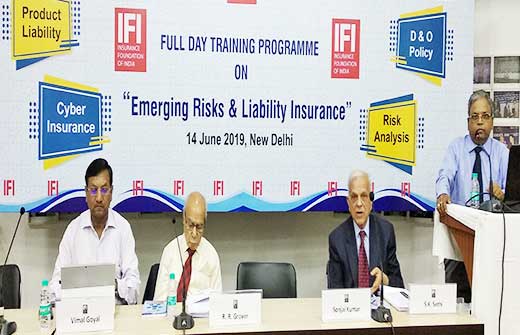
Training Programme on Emerging Risks & Liability Insurance – 2019

Why the need for Specialized Industry Focused Training Programme on Emerging Risks and Liability Insurance?

In the last 20 years, profile of Indian economy has changed from basic industry and we are seeing large growth in Servicing Industry, as a result, it has become a significant player in the growth of Indian economy. IT, e-commerce, exports, project exports, acquisition of companies in foreign countries by Indian Companies or inflow of PE, VC Funding from foreign investors in Indian companies especially in Pharma, IT and e-commerce is resulting in changes in Board Room and the way in which risk is perceived and handled. These changes have ever resulted in the need for Insurance Policies as a part of Shareholders agreement being signed between Indian Promoters & Strategic Investors or PE/VC funds.

Increase in the exports of Pharma Products, Automobiles, Fully Assembled Engines and Automobile Parts in the recent years has resulted in need for Product Liability Insurance as due to quality complaint or need for recall there can be heavy liability on the Indian Manufacturers or Exporters.

We come across need for buying of D & OE insurance Policy or 3rd party liability insurance policy as a requirement clearly recorded in shareholders’ agreement. Now a day’s 3rd party liability insurance policy is required by RWA or owner of the building for getting license from Government authorities in Haryana for issuing license for operating lifts in Multistory towers.

Objectives of the Training Programme:

The Training Programme will address the following issues:

  • Risk perception faced by Indian Companies & Exporters.
  • Risk perception of non-executive/ independent/ female directors joining board of Indian Companies.
  • D & O E Insurance: Need of modern industry.
  • Legal Issues arising due to complex legal agreements among:
    1. Vendors and OEM Customers.
    2. Strategic Partners and Technology Providers.
  • Impact of Social Media and interaction among customers/ opinion makers spread all over the world.
  • Role of NGO’s.

Topics to be covered:

During this Training programme high level of clarity will be achieved by discussing the following:

  • Good understanding of Risk analysis in the changed scenario.
  • Need for Product Liability Insurance.
  • Human resource aspects & its correlation with D&OE policy.
  • D & OE/ Errors & Omissions: Need of IT Industry, BPO, KPO or E-Commerce supported by case studies within India and abroad.
  • #MeToo type cases – Do we have an Insurance Coverage for such movements?
  • Learnings from case studies showing the impact of Social Media/ Consumer Activists/ NGO’s/ Human Rights Groups.
  • Product Recall Case Studies.

Who Should Attend the Training Programme ((Target Participants)?

This will be an opportunity for you to upgrade yourselves to handle Risk Perception due to changing requirements in the economy. This is a good opportunity for:

  • Directors/ Independent Directors.
  • CEO’s.
  • CFO’s.
  • HR Managers.
  • Company Secretaries.
  • Specialists handling underwriting/ business development/ claims pertaining to Liability Insurance in
    1. Insurer Firms.
    2. Insurance Broking Firms.
  • Insurance Manager of Corporate.
  • Insurance Institutes/ Academic Faculty/ Students.
  • Lawyers/ Law Firms
  • Academic – Faculty

What you can expect from the Training Programme?

Increasing exports is very good for Indian manufacturers/ exporters as well as our country but this also increases the responsibility of corporate as any hiccup can result in loss of image/ heavy liability in the form of penalties awarded by courts/ authorities in foreign countries and consequently loss of market share of corporate.

Multiple Laws, Regulations, Factors, Internal Policies (e.g. HR policy) are guiding your business in complex & continuously changing the business environment. Sitting in the Board of Directors meeting without understanding these requirements and need for Insurance policies is the minimum requirement from anyone to make value addition in the Board Room. In short, the participant will be adding knowledge in 7 hours for which he/she may need 95 hours of study on the Internet.

Training/ Delegate Fee:

Participation fee (Includes Training, Study Materials & Lunch)

  • Individual participant fee: Rs. 3500/
  • Group participation fee (team of 3 persons and above): Rs. 3250/-each.
  • Group participation fee (team of 5 persons and above): Rs. 3000/-each.

Note: Prior registration/ confirmation are requested to attend this Training Programme so that Certificates/ Logistics/ Study Material & Lunch can be arranged accordingly.

Certificate:
Certificates will be issued to the participants on completion of this Training Programme.

Training Programme on Project Insurance – 2019

Why need for Specialized Industry Focused Training Programme on Project Insurance?

Indian Economy is growing at a fast pace and a large amount is being invested in the following projects:

Infrastructure

  • Ports/ Airports
  • Highways
  • Roadways
  • Metro/ Rapid Metro
  • High Rise Buildings
  • 300 Smart Cities

The country is also focusing on “Make in India” and a large amount is being invested in setting up of various manufacturing projects:

  • Defense Infrastructure
  • Petro Chemicals
  • Power Generation
  • Food Processing/ Cold Chain Supply Line
  • FMCG
  • Electronics/ Electrical Manufacturing

All these projects need Project Insurance Policies where all aspects of Risk are covered and hence we find that there is need for specialized training Programme on:

  • Contractors All Risks (CAR) Insurance Policy
  • Erection All Risks (EAR) Insurance Policy
  • Advance Loss of Profit Policy
  • Marine Loss of Profit Policy

All major projects and investments present great opportunities, but also have many unforeseen risks as well. The management of risk in construction projects involves both the allocation of risk under the project contracts and the management of those risks through insurance. The ability to recognize and overcome risks is crucial to the success or failure of any project.

Investors, lenders, contractors and implementors of projects are exposed to a wide range of risks which may:

  • Impact the asset base
  • Interrupt the revenue stream
  • Affect repayments to lenders and investors

The potential risks can be divided into the following three groups:

  • Physical Assets Protection
  • Design Engineering Risks
  • Management Liability
  • Financial Market and Economic reforms

Project insurance should cover ‘All-risks’ of loss or damage to the permanent and temporary works comprising the contract, including the materials, and all things used for or intended for incorporation within the contract, throughout various phases of the construction/ erection, including testing.

Objectives of the Training Programme:

This training programme will give an opportunity to participants to interact with faculty, who have vast experience of dealing with products which form part of Project Insurance. Participants will be able to learn about the experience of various organizations.

This training programme is very practical in nature and is Case Study Based to provide a practical understanding of various products which form part of Project Insurance. The aim is to discuss and come out with solutions for issues faced during purchase of these products, lodging and settlement of claims associated with the same.

The programme is structured in such a way that it promotes interaction among managers/ executives of:

  • Firms who purchase Project Insurance Policies.
  • Insurance companies involved in business development, selling, underwriting and managing products which are being sold to corporates.
  • Insurance brokers who are most important insurance intermediary
  • Surveyors & Loss Assessors
  • InsuranceConsultants/ Consulting Companies, who are advising clients in buying project insurance.

Topics to be covered:

Every session will be followed by Questions/ Answers so that high level of clarity is achieved.

  • Contractors All Risks (CAR) Insurance Policy
  • Erection All Risks (EAR) Insurance Policy
  • Advance Loss of Profit Policy
  • Marine Loss of Profit Policy
  • Risk Management in Infrastructure Projects
  • Underwriting Challenges in Infrastructure Projects.
  • Claims Challenges in Infrastructure Projects
  • Contractual obligations
  • Contractual risk flows
  • Competitive Pressures
  • Technological development
  • Regulatory Requirements
  • Claims Procedure – how to expedite it by keeping in mind the Procedural Aspects of Insurers. This will be supported with Case Studies.

Who Should Attend the Training Programme ((Target Participants)?

This is a good opportunity for:

  1. Risk Managers/ Managers handling the purchase of insurance policies and lodging of claims on behalf of:
    • Corporates
    • Implementors of large Projects
    • Manufacturing firms
    • Large Construction Companies
    • EPC Contractors
    • Large Real Estate developers
  2. Decision makers in the large infrastructure companies
  3. Middle/Senior level managers inInsurance Companies
  4. Surveyors& Loss Assessors
  5. Managers/ Executives of Insurance Brokerage Firms – Business Development/ Underwriter/ Claims Department.
  6. Consulting firms providing services to Infrastructure & large projects.
  7. Academic-Faculty members/ students specializing in General Insurance

What you can expect from the Training Programme?

This training programme on Project Insurance will provide the participants with

  • Empowering the customers of project insurance in the infrastructure industry
  • Providing an insurer-insured interface
  • Improving Project Insurance knowledge and professional level.

Training/ Delegate Fee:

Participation fee (Includes Training, Study Materials & Lunch)

  • Individual participant fee:  3500/
  • Group participation fee (team of 3 persons and above): Rs.3250/-each.
  • Group participation fee (team of 5 persons and above): Rs.3000/-each

Note: Prior registration/ confirmation are requested to attend this Training Programme so that Certificates/ Logistics/ Study Material & Lunch can be arranged accordingly.

Certificate:
Certificates will be issued to the participants on completion of this Training Programme.

Training Programme on Risk Assessment and Fire (Property) Insurance – 2019

Why need for Specialized Industry Focused Training Programme on Risk Assessment and Fire (Property) Insurance?

Most businesses realize at the time of claim that the claim amount is not payable because proper risk assessment has not been done at the time of taking the policy. Businesses fail to realize that risk cannot be managed only by taking an insurance policy. It is their responsibility for maintaining a safe environment to conduct the business. The insurance policy will not cover the risks associated with an organization if it fails to fulfill the conditions attached to the policy.

This programme will give an opportunity for participants to interact with faculty, who have vast experience of dealing with businesses and claims worldwide. Participants will be able to learn about common mistakes that cause hardship to organizations.

Fire not only causes losses to an organization’s assets and life but severely affects the goodwill and future growth of the organization. In many cases owner, promoter and directors face prosecutions as we have noticed in the case of fire in certain cinema halls/ hospitals in recent years in different parts of the country.

Objectives of the Training Programme:

This training programme is very practical in nature and is a case study based to provide a practical understanding of risks associated with fire and allied perils. The aim is to discuss and come out with solutions for difficulties faced during the purchase of insurance policy, lodging and settlement of claims.

The programme is structured in such a way that it promotes interaction among managers/ executives of:

  • Firms who purchase fire insurance policies
  • General Insurance company involved in business development, selling, underwriting and managing fire insurance claims
  • Insurance brokers who are most important insurance intermediary
  • Surveyors who are an important link in processing/ settlement of insurance claims

Topics to be covered:

Every session will be followed by Questions/ Answers so that a high level of clarity is achieved, which assists you in your career development.

  • Risk Assessment – It’s a Necessity
  • Fire Hazards and Fire Prevention – It’s Importance
  • Underwriting
    1. Important Clauses under fire insurance
    2. Perils and Add on cover
  • Tips to avoid disputes in fire Insurance Claims
  • Claims Procedure – how to expedite it explaining with live cases
  • Legal Aspects & Procedural Aspects
  • Case Studies

Who Should Attend the Training Programme ((Target Participants)?

This is a good opportunity for:

  1. Managers/ Risk Managers handling the purchase of insurance and lodging of claims from
    • Corporates
    • Trading companies
    • Manufacturing firms
    • Exporters/ Importers
    • Educational Institutes
    • Hospitals
    • Hotels
    • Shopping Malls/ Multiplexes
    • IT companies
    • SME’s e.t.c
  2. Managers/ Executives of Insurance Brokerage Firms – Business Development/ Underwriter/ Claim Department.
  3. Managers/ Executives of General Insurance/ Reinsurance Companies involved in business development, selling, underwriting and management of claims
  4. Surveyors (members of Indian Institute of Insurance Surveyors and Loss Assessors)
  5. Consulting firms providing risk management services, claims management services
  6. Academic-Faculty members/ students specializing in Insurance planning to make a career in General Insurance.

What you can expect from the Training Programme?

This executive development programme on Risk Assessment and Fire Insurance Claims will provide the participants with comprehensive, multifunctional perspective on how to assess risk, maintain processes for risk mitigation, comply with statutory procedures on containment of risk and management of claims.

  • How to get a claim payment in 60 days – Insurance client
  • How to get your client’s claim settled in 60 days – Insurance Brokers
  • How to complete your assignment in 30 days – Insurance Surveyor
  • Managing your risk – cost-effectively – Insurance client/ Managers of Insurance companies.

60 days to the passing of an insurance claim is what we will focus on. Time is money, as the claims process gets extended the cost for all the stakeholders goes up. It results in financial and goodwill loss for all the stakeholders, who are involved.

Training/ Delegate Fee:

Participation fee (Includes Training, Study Materials & Lunch)

  • Individual participant fee:  3500/
  • Group participation fee (team of 3 persons and above): Rs.3250/-each.
  • Group participation fee (team of 5 persons and above): Rs.3000/-each

Note: Prior registration/ confirmation are requested to attend this Training Programme so that Certificates/ Logistics/ Study Material & Lunch can be arranged accordingly.

Certificate:
Certificates will be issued to the participants on completion of this Training Programme.